Shania Najafi
Born in 1996, Shania Najafi lives and works in Paris. A graduate of Villa Arsonin Nice andÉcole Condé in Paris, she has developed an interdisciplinary practice that spans drawing, painting, ceramics, and textiles.
Drawing onhistory, mythology, and current events in Iran—the country where her parents are from—Shania Najafi moves back and forth between the personal and the universal, between personal narrative and the course of history. She strives to give artistic resonance to the struggle of Iranian women. To this end, she reinterprets Mesopotamian, Persian, and Iranian symbols of power and reorients them toward struggle and emancipation.
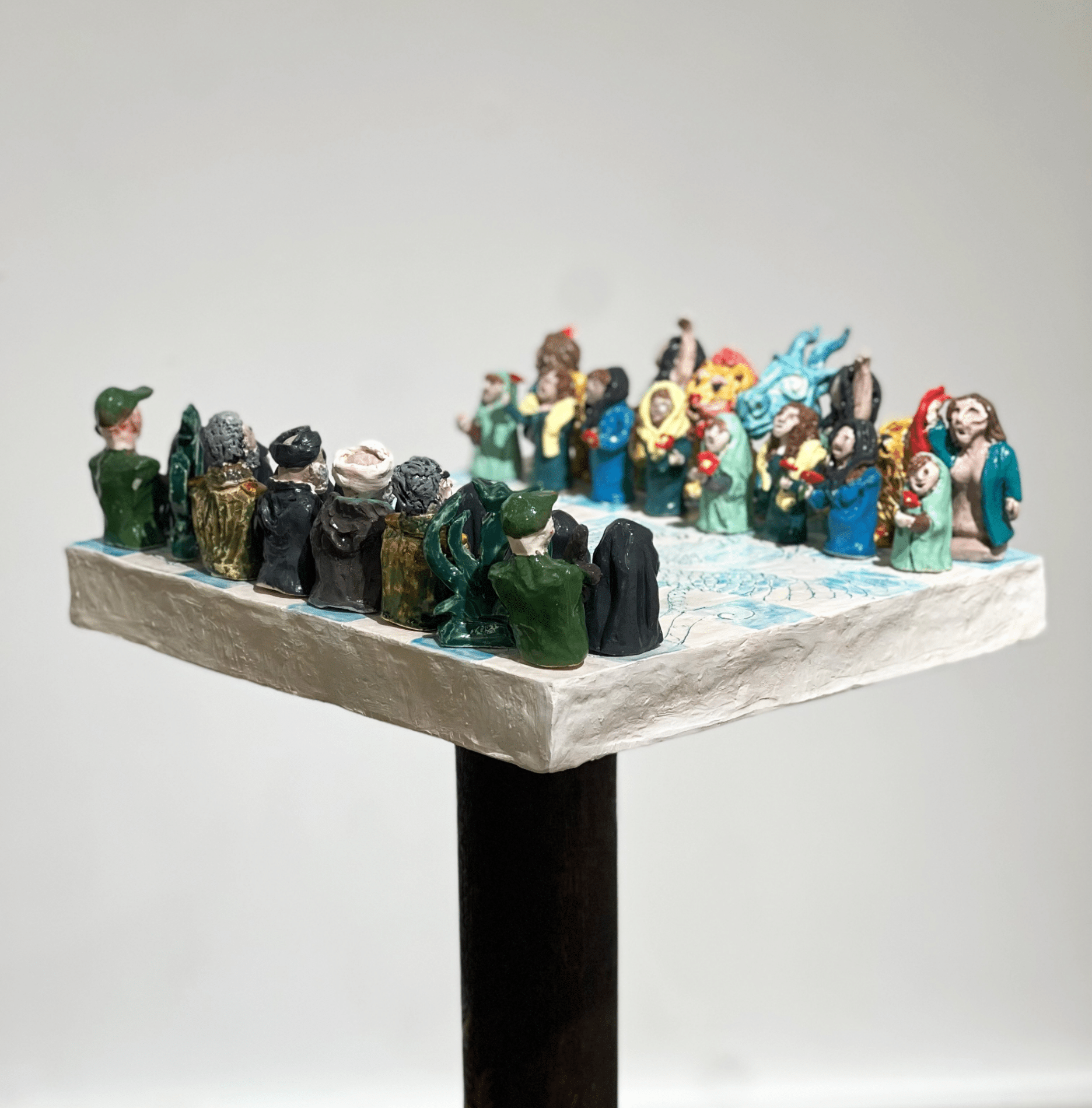
Private Choice alsoChoice a glazed ceramic chess set titled WOMAN LIFE FREEDOM in reference to the slogan honoring Mahsa Amini. On the game board, the camp of repression —composed of dignitaries of the Mullahs’ regime and their armed forces—faces off against the camp of women in struggle, brandishing their flowers. The king and queen are here replaced by the bull and the lion, whose struggle symbolizes the changing of the seasons andthe dawn of a new world. For the artist, the struggle for the rights of women and the Iranian people requires strategic action in which each person has a role to play, much like in a game of chess.