Shania Najafi
Born in 1996, Shania Najafi lives and works in Paris. A graduate of Villa Arsonin Nice andÉcole Condé in Paris, she has developed an interdisciplinary practice that spans drawing, painting, ceramics, and textiles.
Drawing on Iranian history, mythology, and current events —the country where her parents are from—Shania Najafi moves back and forth between the personal and the universal, between personal narrative and the course of history. She strives to give artistic resonance to struggle of Iranian women. To this end, she offers a reinterpretation of Mesopotamian, Persian, and Iranian symbols of power and reorients them toward struggle and emancipation.
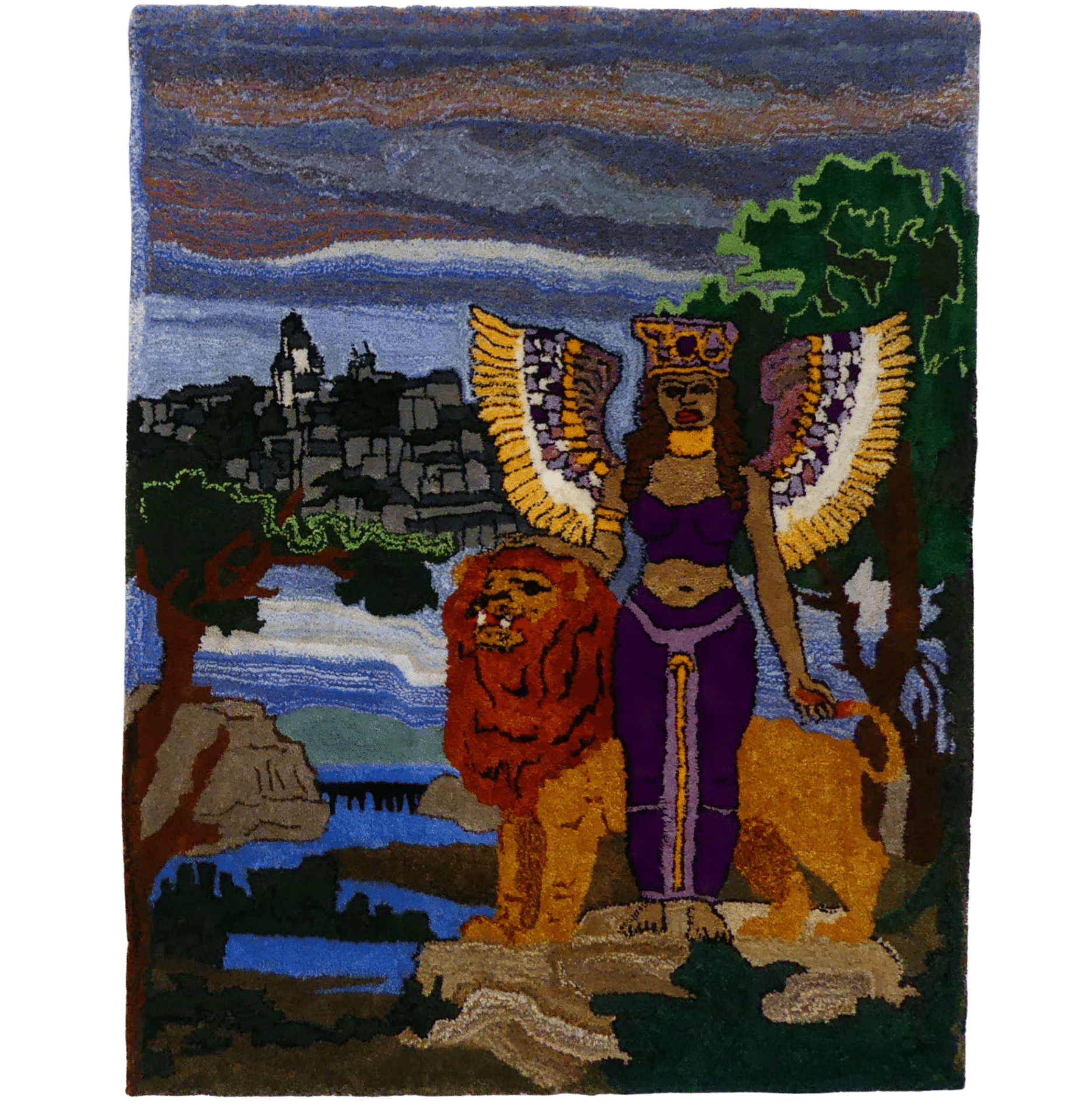
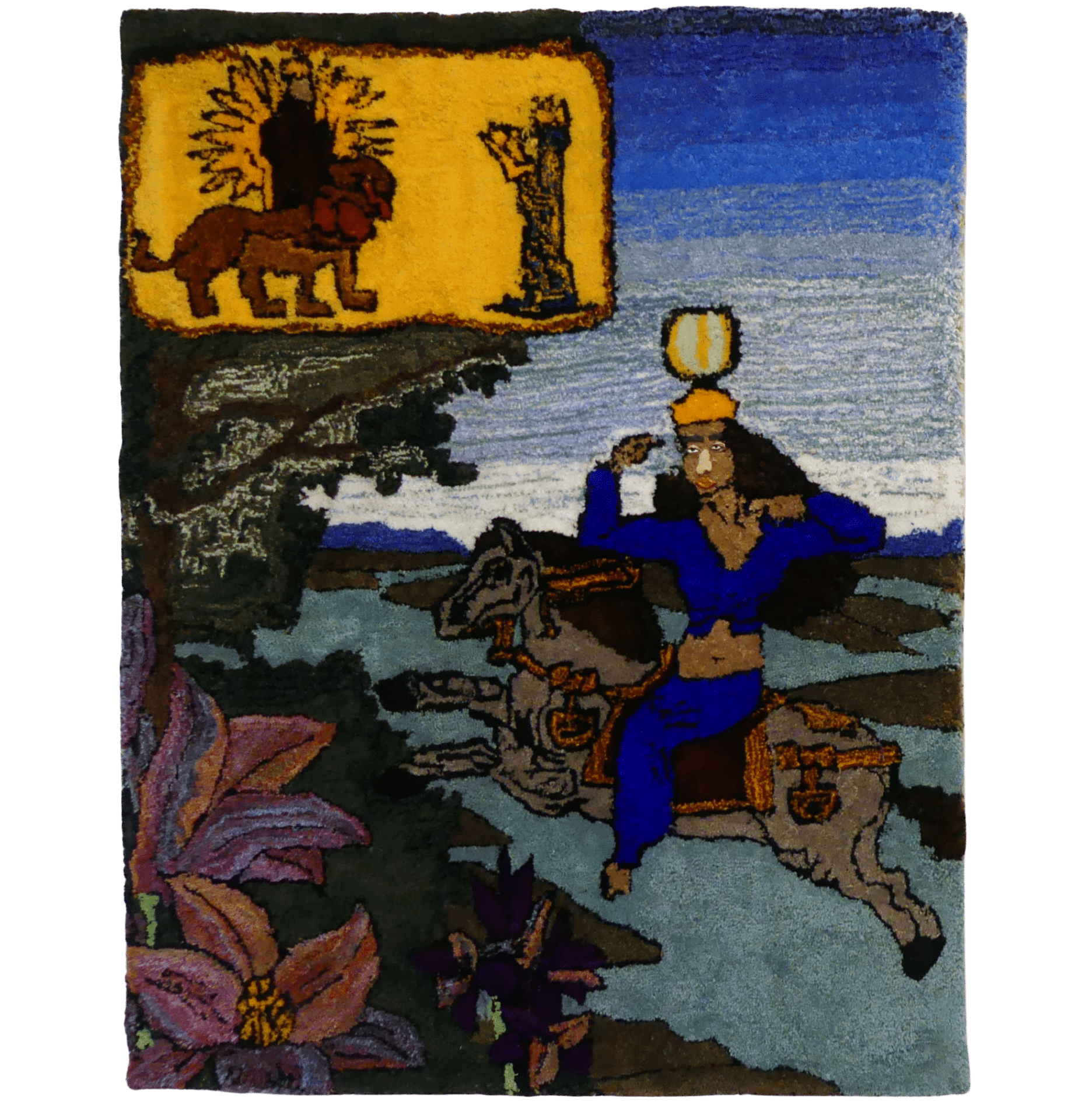
These reversals are the subject of a series of woolen tapestries created using the tufting , whose motifs are reminiscent of the art of Persian . Ishtar depicts the Mesopotamian goddess of war and love alongside the solar lion, the ancestral emblem of royalty. Their meaning is subverted. Ishtar is exiled to Paris. Endowed with the power to overturn opposites and break taboos, she seems to tame the animal also depicted on the tapestry Shapur II. On the latter, an equestrian figure, inspired by a depiction of Shapur II, is reimagined in a feminine form. This shift offers a reinterpretation of a historically masculine heroic imagination and redistributes its symbols of power. In this series, ancestral figures appear alongside more contemporary icons such asAhoui Daryaei, a student arrested in Tehran in 2024 for appearing naked on campus in protest against violence by the university administration (Note: This tapestry is not included in the exhibition).
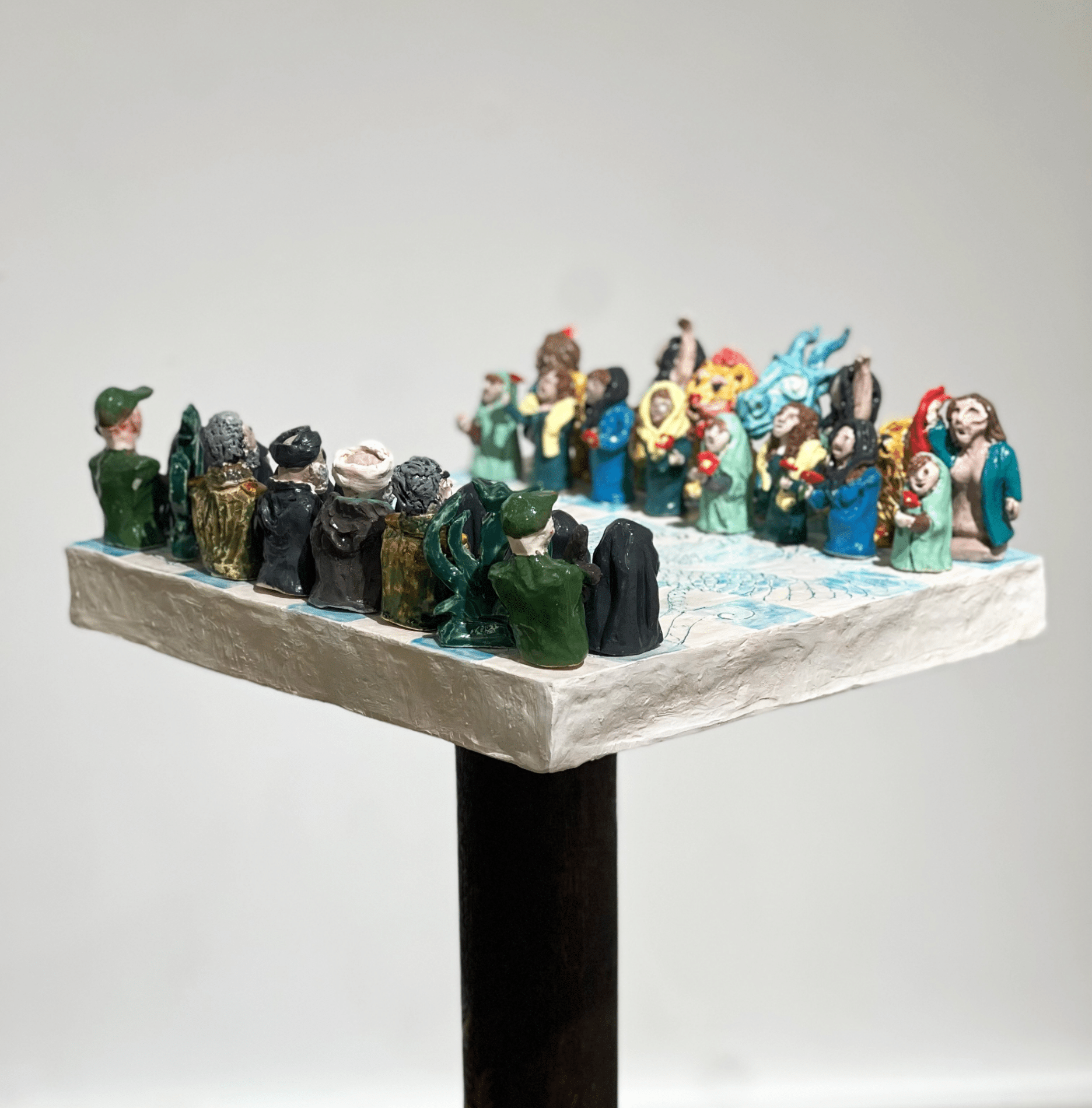
Private Choice alsoChoice a glazed ceramic chess set titled WOMAN LIFE FREEDOM — a reference to the slogan honoring Mahsa Amini. On the game board, the the camp of repression composed of dignitaries of the Mullahs’ regime and their armed forces, and the camp of women in struggle, brandishing their flowers. King and queen are here replaced by the bull and the lion, whose struggle symbolizes the changing of the seasons, the dawn of a new world. For the artist, the struggle for the rights of women and the Iranian people requires strategic action in which each person has a role to play, much like in a game of chess.