Hanna DUBEY
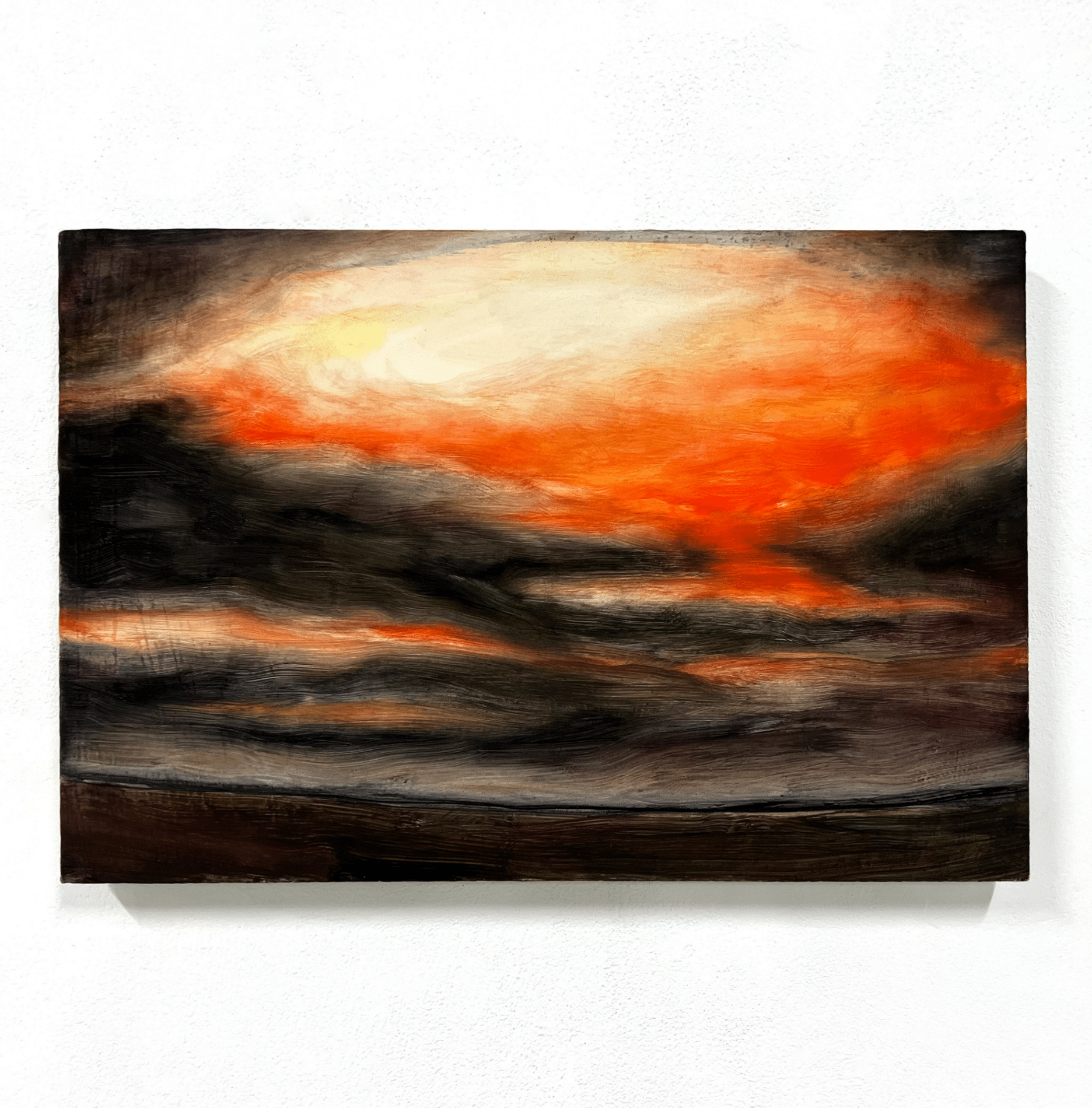
As with every legendary artist—or one destined to become one—a defining life event lies at the heart of Hanna Dubey’s (born in 2001 in Paris) work and style: her visit to the Marfa Desert in the United States, where weather phenomena, nuclear experiments, the menacing sky, and its radioactive lights evoked in her a feeling bordering on the sublime—somewhere between wonder and terror.
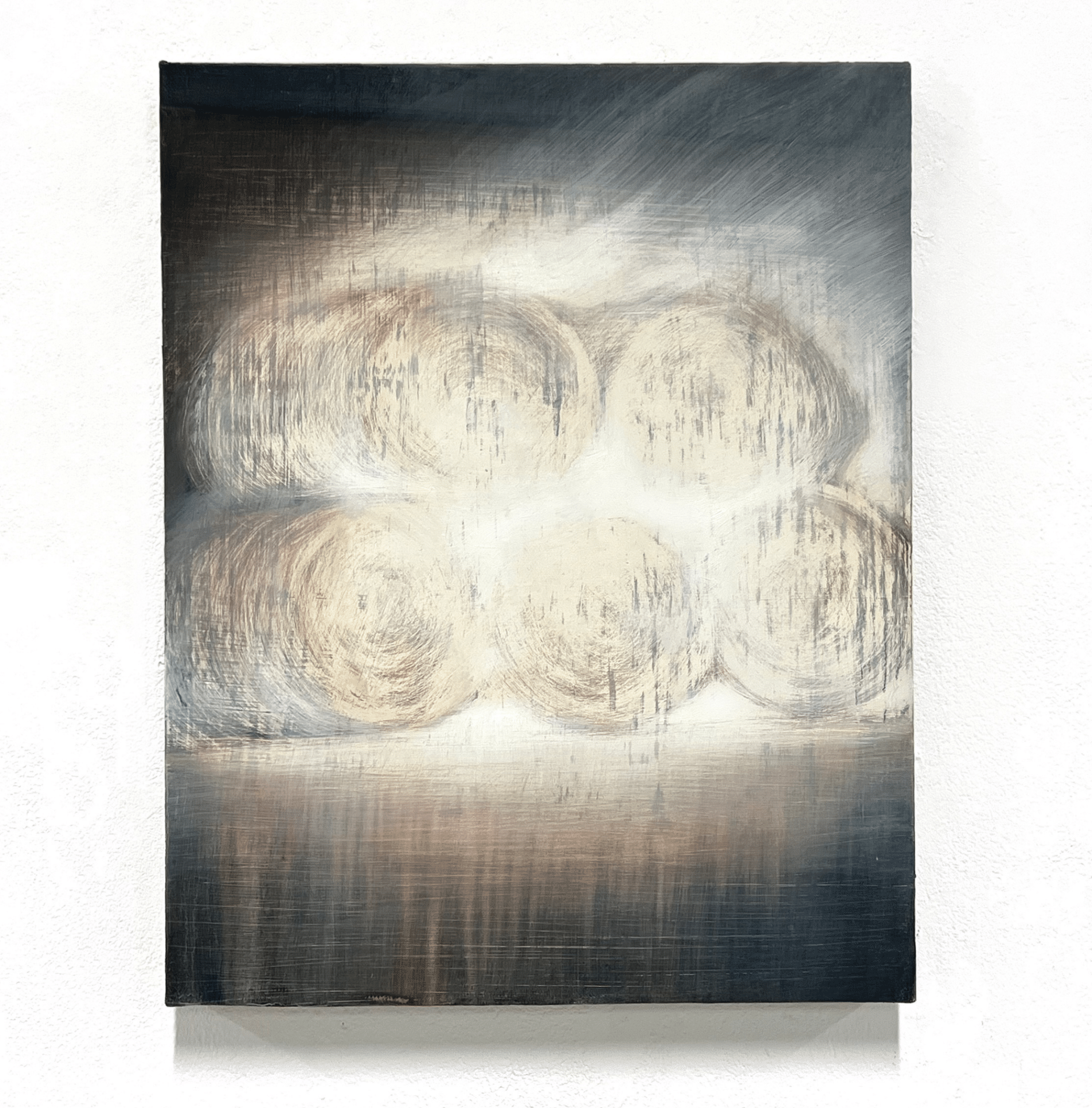
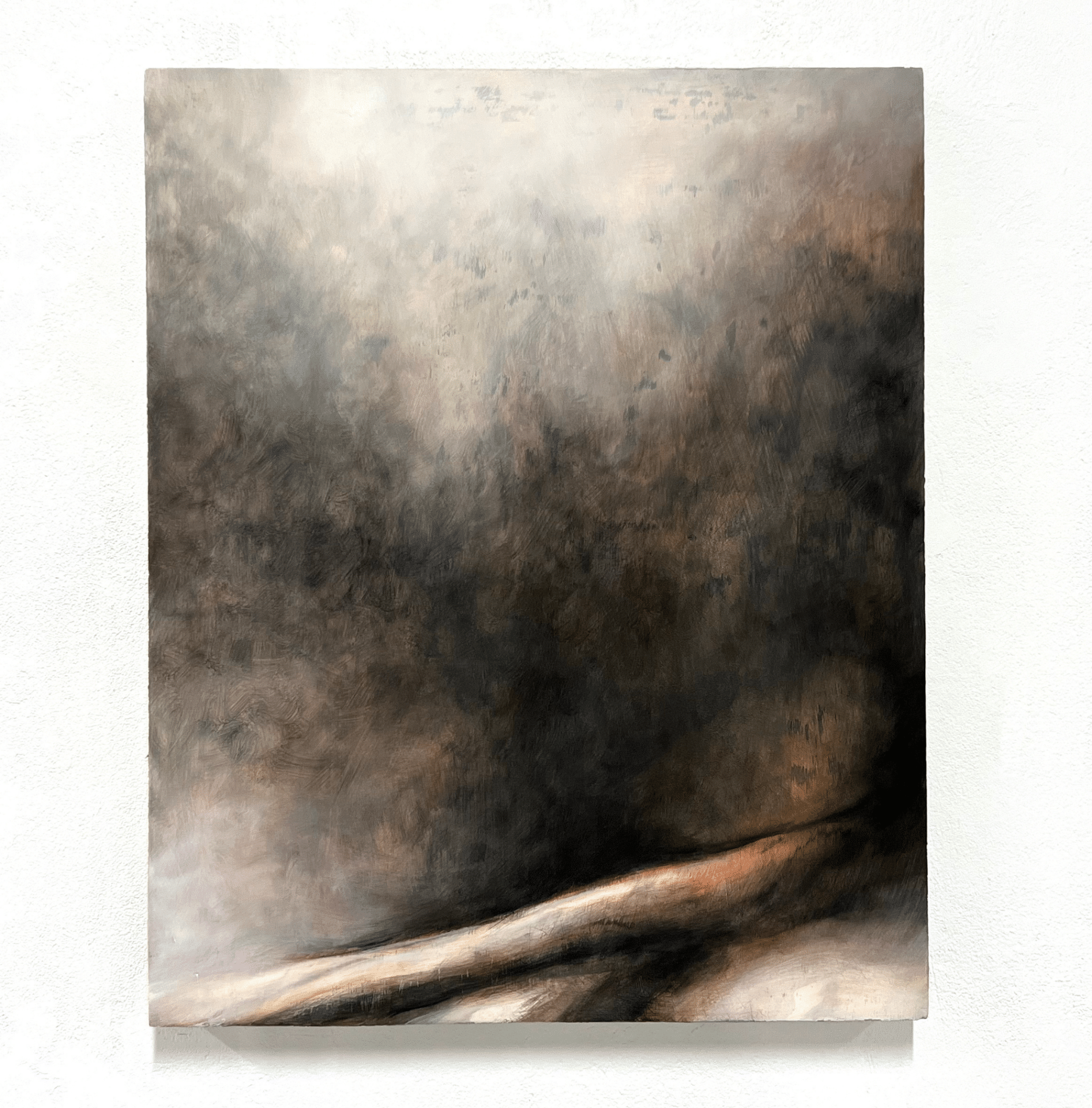
Beyond these mesmerizing landscapes, her paintings are also the result of iconographic work that draws on a variety of sources, ranging from the Renaissance to her everyday experiences. These images, which resurface on the canvas after a long period of settling in her mind, resemble in their effect the philosophical concept of the afterlife of images (Nachleben). Her technique itself contributes to this aesthetic: Hanna Dubey first paints the luminous layers and also takes care to prepare her canvases herself, thereby imbuing them with a sense of lived experience. The result is visual fragments of isolated elements—silent and seemingly radiant—with a superheated material that threatens to render them illegible and cause them to vanish.
Thus, the visual impact and evocative power of his work stem from a synergistic approach in which the creative process, representation, and technique give rise to these unforgettable images—somewhere between an enigmatic collective memory and a depiction of a world that is both in decline and on the verge of blossoming, in the style of Anselm Kiefer.